Bookings through this site are not open yet; it is looking for a local Rialto installer to work with. You can check typical prices below and ask to be notified.

Control Joints in Concrete, Explained

Concrete Foothill Rialto explains control joints, the planned weak lines in a concrete slab, because a driveway with the right joints cracks where nobody minds and one without them cracks wherever it likes.

Check availability & price range Illustrated guide · Concrete Driveways
(909) 787-0050 Voicemail

Bookings aren't open yet. Leave your name and number; your message is recorded, and you'll get one message when a local installer is available.

Concrete Guides

The slab as it starts

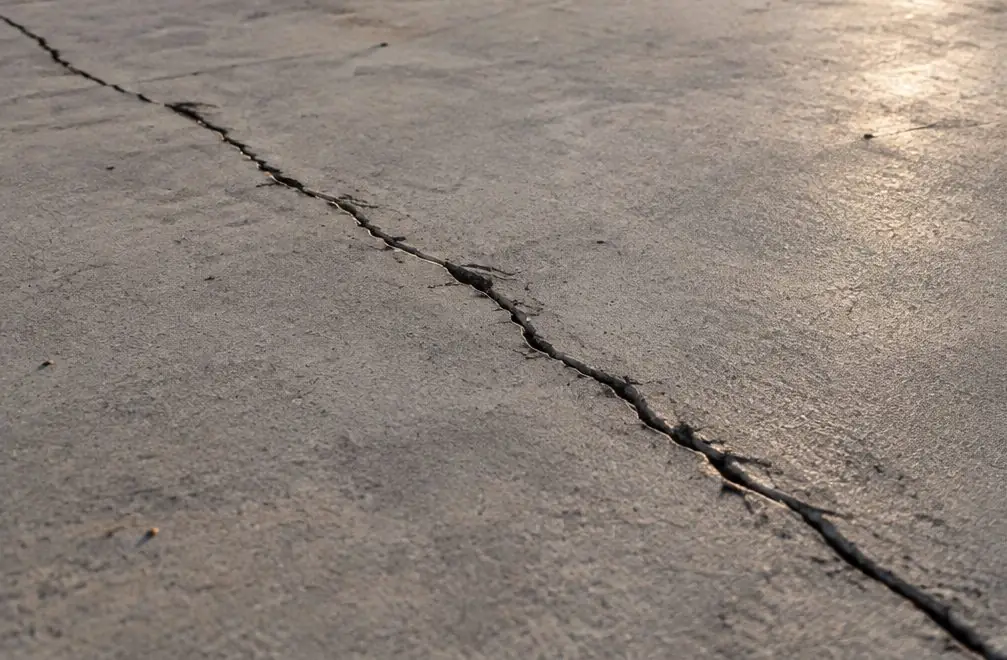
Illustration: a plain gray slab with a long diagonal crack running across it from corner to corner and no joints Illustration
Concept illustration, AI-generated. Not a photo of a completed installation.

The planned slab (illustration)

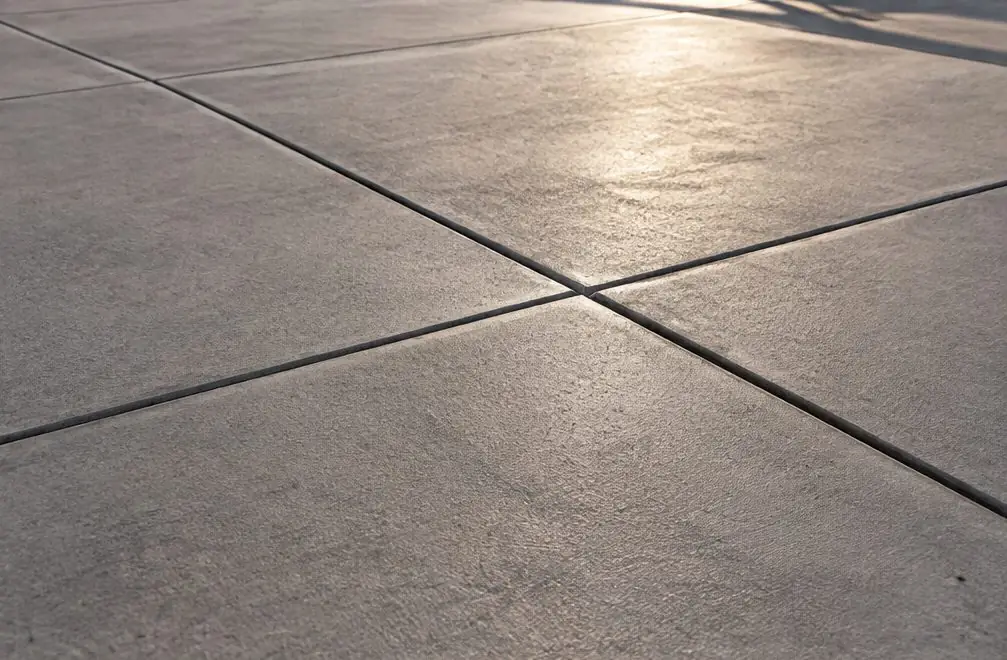
Illustration: a gray slab cut into near-square panels by neat sawn joints with a joint running out from an inside corner Illustration
Concept illustration, AI-generated. Not a photo of a completed installation.

What a joint is for

A control joint is a groove cut or tooled into the top of a slab. It makes a weak line, and the slab cracks along that line as it shrinks, instead of across the panel. The crack is below the groove, out of sight, and the slab stays together by interlock between the faces.

How deep and how far apart

A joint is cut about a quarter of the slab's depth. A common rule of thumb in the trade puts joints about two to three times the slab thickness in inches apart, in feet, so about 8 to 12 feet for a four-inch slab, in near-square panels. A long, thin panel cracks across its length, so panels stay close to square.

Corners and edges

An inside corner, such as the elbow of an L-shaped driveway, concentrates stress, and a crack tends to start there. A joint runs out from every inside corner. Where the slab meets a wall, a separate isolation joint, a gap with a filler strip, keeps the slab from locking onto the wall as it moves.

When joints are cut

Joints are cut as soon as the surface can take a saw without ravelling, usually the same day or the next morning, and earlier in hot weather. A joint cut too late misses its job, because the slab may already have cracked.

Reading a joint plan

A quote can show a joint layout as a sketch. Look for near-square panels, a joint from each inside corner, an isolation joint at the house and joints that line up with the garage door or the edges of other slabs. If a quote says nothing about joints, ask.

Where this leads

Check availability and the price range for this setup

Bookings aren't open yet — a typical Rialto range in about 30 seconds.

Step 1 Range —
    What is the concrete job?

    A new driveway, patio or walkway, a repair or a resurfacing, or a business property.

    How big is the slab?

    Typical: a two-car driveway, about 480 square feet.

    Length × width in feet; the square feet is the product.

    Which finish?

    Typical: a plain gray broom finish, the most common driveway surface.

    How thick, and what goes inside?

    Typical: 4 in. with a rebar grid for a car driveway; RVs and heavy trucks call for more.

    What comes out first?

    Typical: old concrete, since most Rialto driveways are replacements.

    Anything extra? optional

    Skip if none apply; an approach is only for work in the street right-of-way.

    How much needs fixing?

    Typical: half a driveway, about 240 square feet.

    What kind of repair?

    Typical: crack repair and sealing.

    What does the concrete look like now? pick all that apply

    Pick every line that fits; hairline cracks add nothing.

    Anything extra? optional

    Skip if none apply.

    What kind of surface?

    Pick the surface that carries the most traffic.

    How big is the area?

    Typical: a small lot, about 2,000 square feet.

    Which slab?

    Typical: 5 in. reinforced, for a lot with cars; trucks call for more.

    What else is in the scope? pick all that apply

    Pick every line that fits.

    When can the work happen? optional

    Typical: after hours or on a weekend. No price change.

    Anything extra? optional

    Skip if none apply.

    Notes and photos optional

    Optional: a short note, such as a slope, a gate or a tree near the slab.

    Additional files (optional) If you like, attach any file related to your request. Nothing is required. Please avoid photos of people, especially children, and documents with personal or financial details. Location data is removed from photos when they are received. Bookings through this site are not open yet, so no one reviews or prices these files. Up to 5 files, 10 MB each: photos (JPEG, PNG or WebP) or PDF.
      Your range

      A ZIP code is enough; email and phone are optional.

      • Pick the job, its size and a finish to see the range.

      Typical Rialto range—

      One message when bookings open

      Bookings through this site are not open yet. No installer will contact you. Your details are used only for the price range and, if you leave an email, one availability message.

      This site is operated by Liberty Horns LLC and is not a contractor. Price ranges are market estimates, not quotes. Privacy Policy.

      Typical Rialto area concrete prices, square foot by square foot

      Pick the job, the size and the details, and see the range. No contact details needed. Bookings open here once a local concrete contractor is named on this site.

      (909) 787-0050 Voicemail

      Bookings aren't open yet. Leave your name and number; your message is recorded, and you'll get one message when a local installer is available.

      Voicemail (909) 787-0050
      Enlarged photo